For quick lube and oil change shops
Front desk software for quick lube shops
Two things, done properly: the call you could not get to is texted back in seconds, and the review is asked after every car pulls out.
14-day free trial on the plan you pick, nothing charged for 14 days
For a quick lube, Service VIN is the front desk and marketing layer that runs alongside your point of sale: every missed call texted back and every review asked.
The short answer
Is Service VIN a point of sale for a quick lube?
No. A lube ticket is closed in the bay in minutes and your point of sale should keep that job. Service VIN does the two things that happen either side of it: every missed call texted back from your own number in seconds, and every review asked after the car pulls out.
- A caller who reaches nobody because all three bays are full gets a text from your own business number within seconds.
- The review ask goes out after the visit on its own, so a good week shows up on your listing instead of only in the till.
- Private feedback comes back to you rather than onto a public page, which is the difference between fixing it and reading about it.
- Your Google Ads spend is reported against the work it brought in, and the reminder to a customer you already have goes out from the shop line.
- Nothing migrates: the bay terminal, the oil specs and the ticket stay exactly where they are.
Bottom line: Two things decide a lube shop's month that happen nowhere near the bay: whether the phone was answered, and whether anybody asked for the review.
Before the car arrives
Nobody rings a lube shop twice
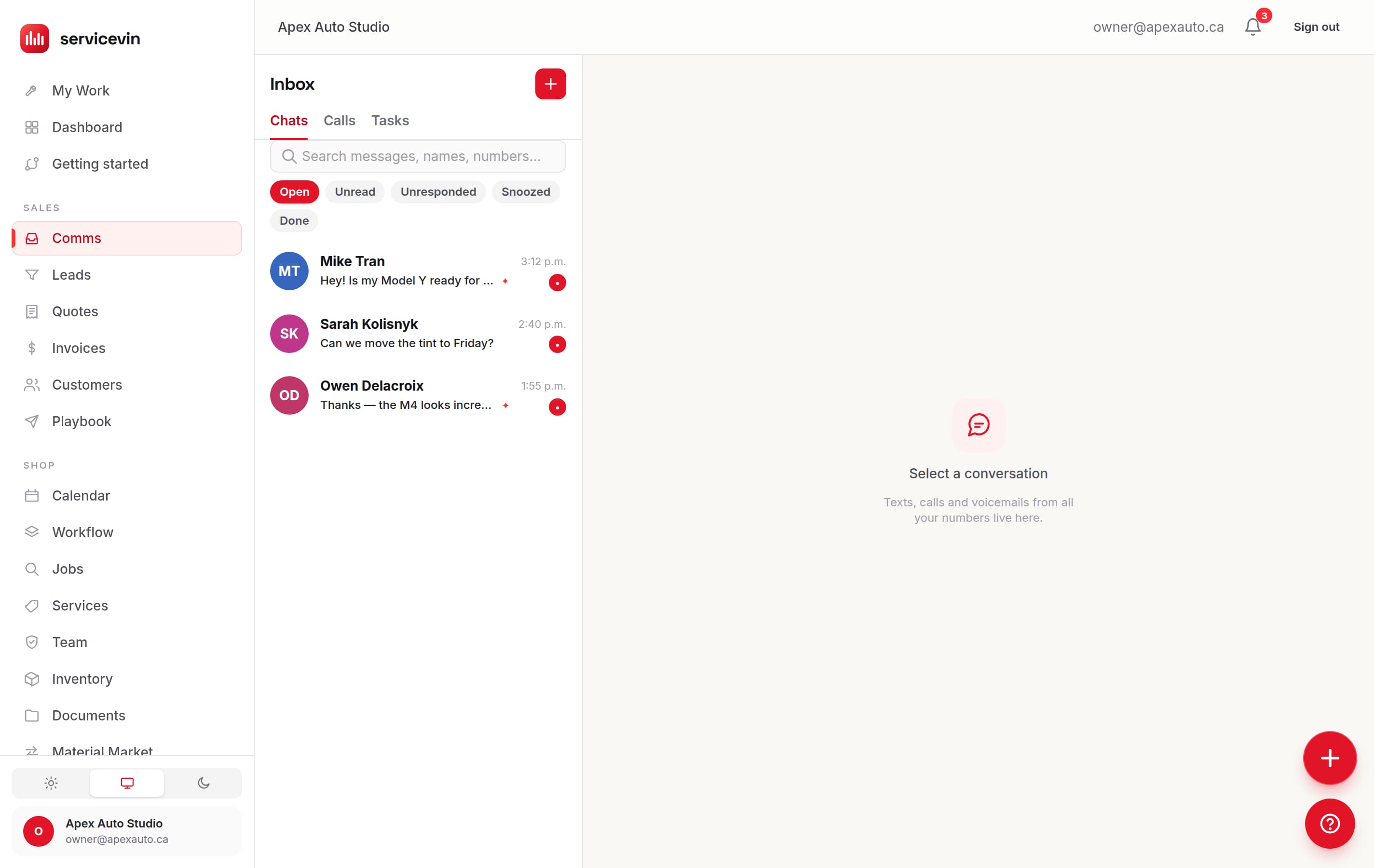
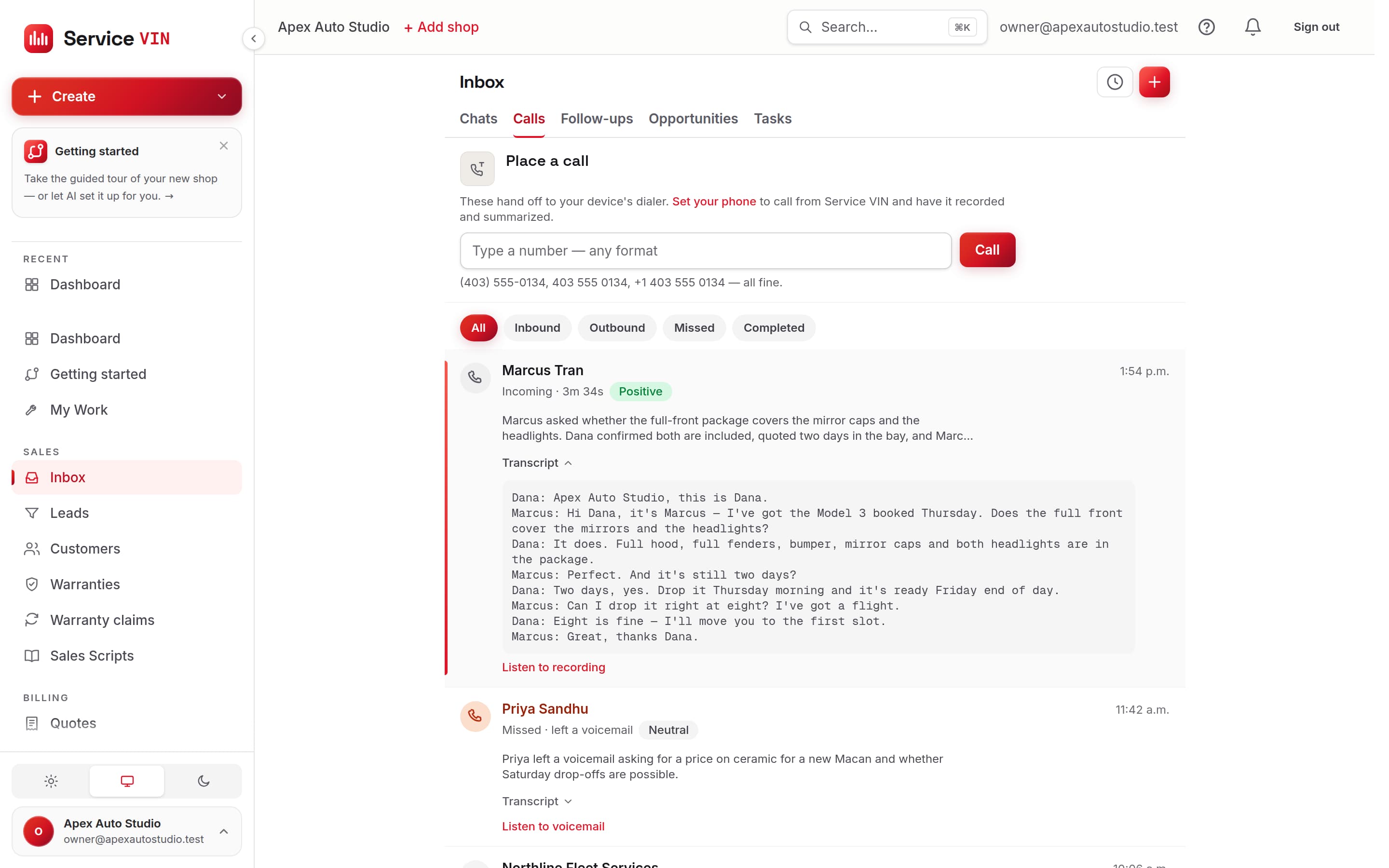
A caller wants to know whether you can take them now and what it costs, and if nobody picks up they drive to whoever does. Missed-call text-back answers from your own number in seconds and puts the reply in front of whoever is free.
Texted back in seconds
All three bays full and the phone ringing at the counter. The caller who reaches nobody gets a text from your own business number before they have finished dialling the shop up the road.
One line, not a personal mobile
Replies land in a shared inbox anybody on shift can answer, from a carrier-registered shop number, so nothing important lives on one person's phone.
What was asked, on the record
Calls you do take are recorded, transcribed and summarised on the customer's thread, so a question about a fleet account is not re-asked every time.
After it pulls out
The review nobody had time to ask for
A lube shop serves more customers in a week than most shops see in a month and has fewer reviews than either, for one reason: nobody at the counter has a spare minute. The review ask runs on its own, and the unhappy ones come back to you first.
The ask goes out on its own
After the car pulls out rather than when somebody at the counter remembers, which is the only reason most lube shops have fewer reviews than customers.
Unhappy feedback comes to you first
Private feedback is routed back to the shop instead of onto a public listing, so a bad visit is something you can fix while the customer is still nearby.
A reminder to the customers you have
A text when somebody is due again, from the shop line, to people who have not opted out, with quiet hours and a per-customer limit enforced in code.
What you get, and what you keep
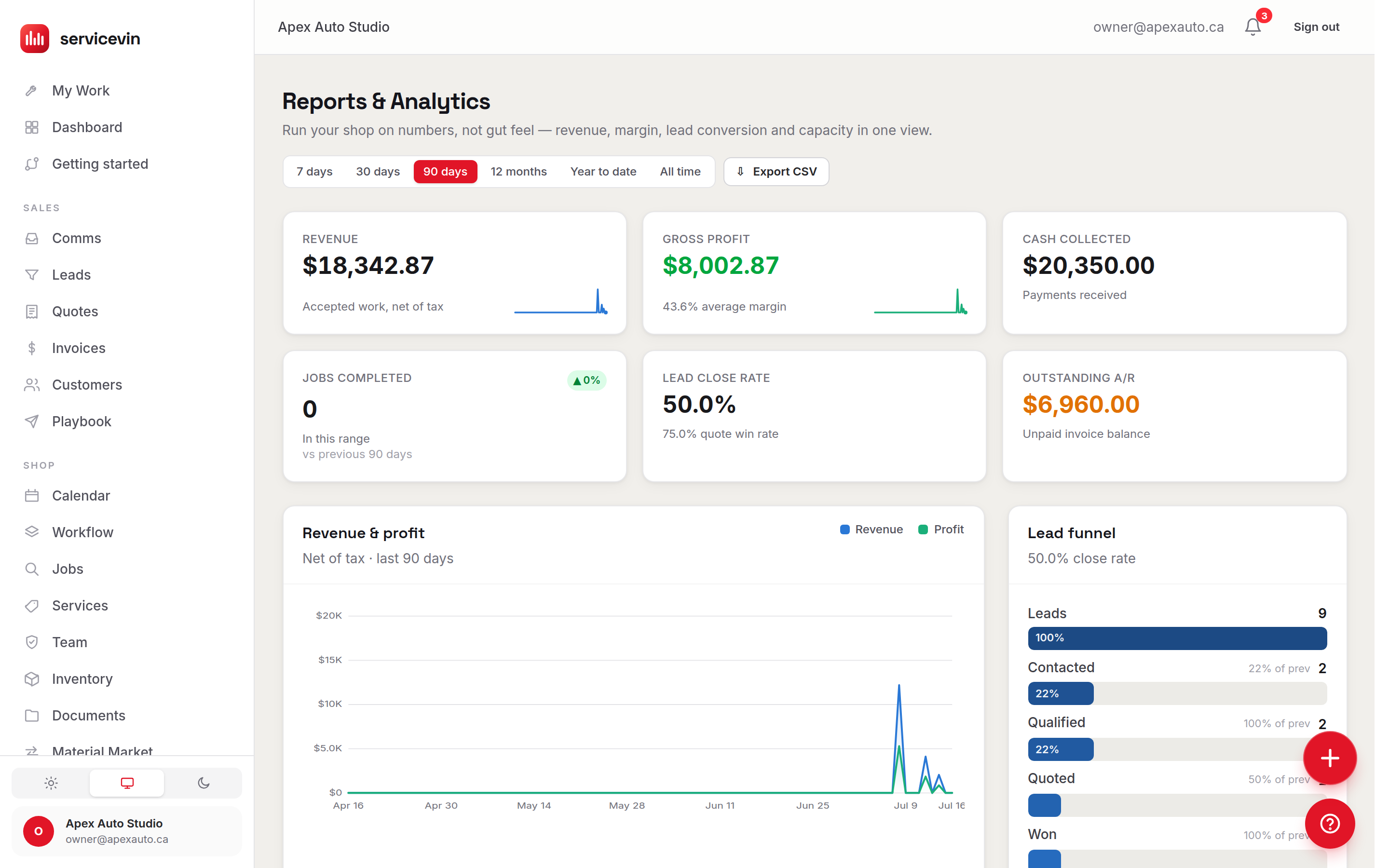
The phone, the missed call, texting, reviews, your Google Ads and their return, booking requests, quotes for work that needs no parts catalogue, and a secure page for every quote, invoice and receipt.
It does not do labour guides, parts ordering or digital inspections yet. Keep your shop system for the repair order. Give us the phone.
What the front desk costs a quick lube
Four flat plans for the whole shop, Essentials $79, Growth $199, Operations $299, Command $399 in US dollars, with no per-seat charge. Most lube shops want the Operations plan at $299 a month, which is the one carrying the business number and the call intelligence, and every plan starts with a 14-day free trial on the plan you pick.
Start with the call you missed. It is included on the Operations plan, with your own business number, and it runs beside the terminal in your bay, so nothing about how a ticket is written has to change.
Where to start
It starts with the call you missed.
Every missed call answered in seconds. The quote you promised, drafted before you hang up. Booked straight into your calendar.
It answers from your real services, your real prices and your real calendar — and writes the booking into them. No migration, no data to move — it runs beside whatever you use today.
The front desk for a quick lube, answered
Will this replace the terminal in my bay?
No, and it should not. A lube ticket is identified, upsold and closed in about the time it takes to drain the oil, and a system that made that slower would cost you more than it saved. Keep the terminal. This is the phone before the car arrives and the review after it leaves.
We have no appointments. Is a missed call really worth anything?
It is the one call that is, because nobody is ringing a lube shop for a chat: they are asking whether you can take them now and how much. A caller who reaches nobody drives to whoever answers. A text from your own number within seconds is often the whole difference.
How does the review ask work?
It goes out after the visit rather than when somebody at the counter remembers, from the shop's own carrier-registered line, obeying opt-outs and quiet hours in code. Unhappy feedback is routed back to you privately instead of onto a public listing, so you get the chance to fix it while the customer is still nearby.
Can I text customers who are due again?
Yes, from your own line, to customers who have not opted out, with quiet hours and a per-customer limit on unprompted commercial messages that cannot be switched off by accident. It is a reminder to people you have already served, and never a list somebody bought.
Does it track oil specs, filters or used-oil manifests?
No. Oil capacity and viscosity by vehicle, filter cross-references and used-oil records are the bay's job and belong to the system you run there. This page is deliberately narrow about it: two things well, and an honest no to the rest.
Is it worth it for a single-site independent?
If your phone is answered every time and your reviews already arrive without anybody asking, no. If the phone rings out on a Saturday morning and your listing has not moved in a year, those are the two things this does, and there is nothing to migrate before you can tell which shop you are.
How much is it?
Essentials $79, Growth $199, Operations $299 and Command $399 in US dollars, flat per shop, with no per-seat charge. The business number and the call intelligence are on the Operations plan at $299 a month, and every plan starts with a 14-day free trial on the plan you pick.
Keep the bay. Take back the phone.
Every missed call texted back from your own number, every review asked after the car leaves, and nothing about how a ticket is written has to change. Start a 14-day free trial on the plan you pick, with nothing charged for 14 days.